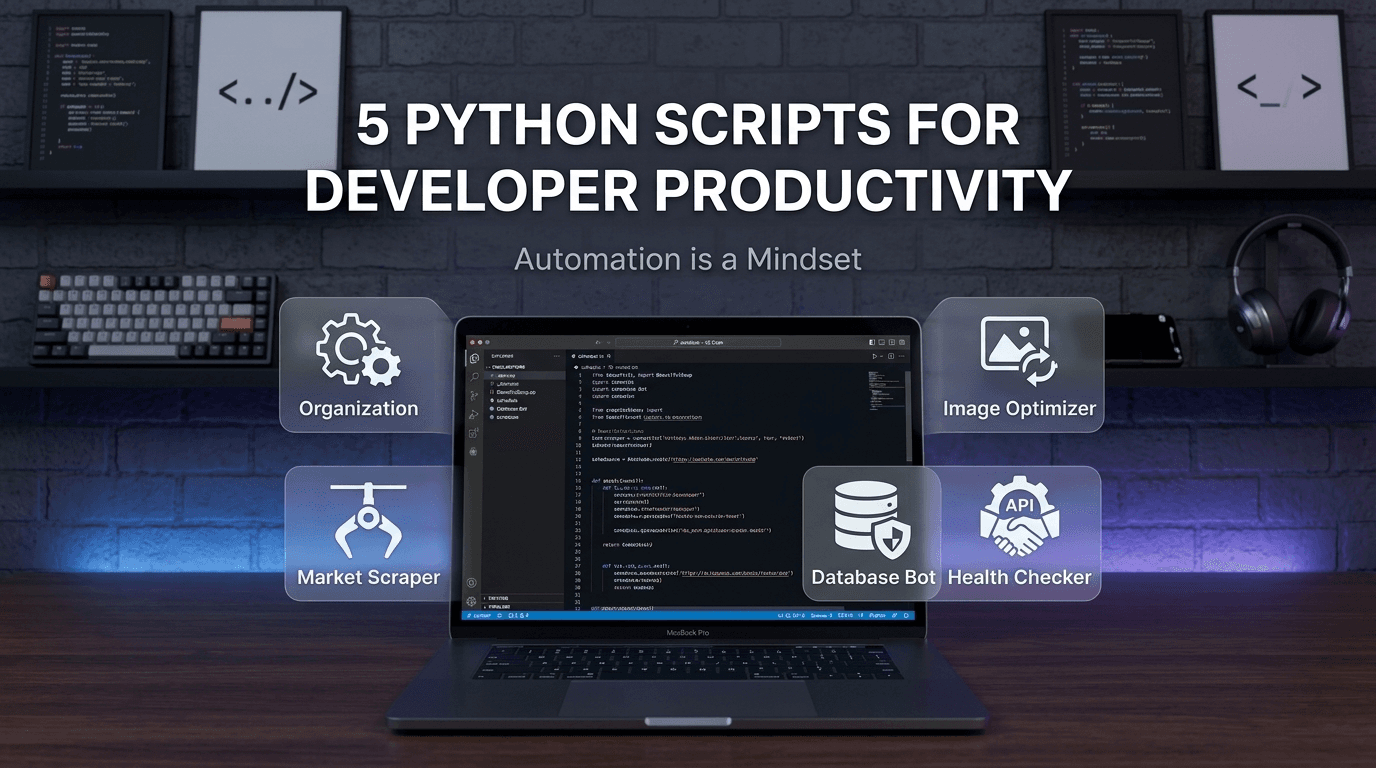
The Art of Clean Code: Why Maintainability is the Ultimate Goal for Every Professional Developer
Introduction: More Than Just Syntax
Writing code is often seen as a way to talk to machines. However, as any experienced software engineer will tell you, code is actually a medium of communication between humans. Whether it’s a complex backend architecture or a sleek frontend interface, the primary goal remains the same: Clarity. In the fast-paced world of tech, where frameworks like React or Next.js change every few months, the value of high-quality, readable logic remains permanent. This is the core philosophy we drive at Nexovent.
1. The Trap of "It Just Works"
Many beginners celebrate the moment their compiler shows zero errors and the output is correct. But "making it work" is only 10% of the job. If you write complex logic today that you cannot understand six months later, you haven't just solved a problem; you’ve actually created Technical Debt for your future self.
Experienced developers know that code is read far more often than it is written. Every extra second a fellow developer spends trying to "decode" your script is wasted time. Clean code isn't just about pretty indentation; it's about reducing the cognitive load for anyone who looks at your logic.
2. Simplicity is the Ultimate Sophistication
The best documentation isn't a 50-page manual; it is the code itself. When a function name clearly describes its action and a variable name reflects its purpose, the code becomes "self-documenting."
At Nexovent, we believe that complexity is the enemy of progress. Whether we are building automation tools or managing database structures, we aim for a modular approach. By breaking down large problems into small, maintainable functions, we spend significantly less time in the frustrating cycle of debugging.
3. Building a Legacy on GitHub
Your GitHub profile isn't just a place to store files; it’s a story of your discipline and deep thinking. When top-tier companies or open-source contributors look at your repositories, they aren't just looking for functionality. They are looking for:
Modularity: Can this code be reused?
Scalability: Can this system handle growth?
Consistency: Is the naming convention and structure uniform?
A well-structured project on GitHub tells a story of a developer who cares about excellence, not just completion.
4. Conclusion: The Transition to Professional Engineering
The journey from a coder to a professional software engineer is marked by the transition from "making it work" to "making it elegant." Frameworks and languages are tools, but clean logic is a mindset.
As I continue to build solutions under the Nexovent brand, my goal remains to create software that is so intuitive that it doesn't need a manual. In the end, the art of clean code is about respecting your peers, your future self, and the craft of engineering.